



E-filing acrylic nails means using an electric file with a smooth, bevelled bit to remove the bulk from a sculpted set quickly, then finishing with a hand file for straight sidewalls, a light buff and an acetone wipe for a smooth surface. In this video Kirsty shows how she does it at salon speed on a set that is already sculpted out.
Using an electric file removes the bulk quickly, saves your hand, and makes the hand filing that follows far easier. Below you will find each step with screenshots and video timings, safety advice, tips and answers to common questions.
At a Glance
- Topic: e-filing acrylic nails at salon speed
- Artist: Kirsty
- Technique: electric file with a flat-end bit, then hand filing
- Speed used: around 15 on short nails
- Key products: 3 Way Buffer, Pure Acetone, an electric file and a hand file
- Video length: about 8:19
Why You'll Love This E-Filing Tutorial
- Speeds up the service in the salon
- Saves your arm and hand
- Combines e-file and hand file in one routine
- Honest advice on safety and training
Using an E-File Safely
Kirsty says an e-file is fine when used correctly, and that bad experiences usually come from incorrect use or abrasive bits on the natural nail. Only use one if you have been trained.
She chooses a flat-end bit here because the nails are short and its bevelled curve will not cut into the skin or the nail. The e-file does the heavy lifting, then a hand file in a fixed routine (sidewalls, cuticle area, free edge, top surface) gives the final shape.
Products Used in This Video

How to E-File Acrylic Nails
1. Remove the bulk
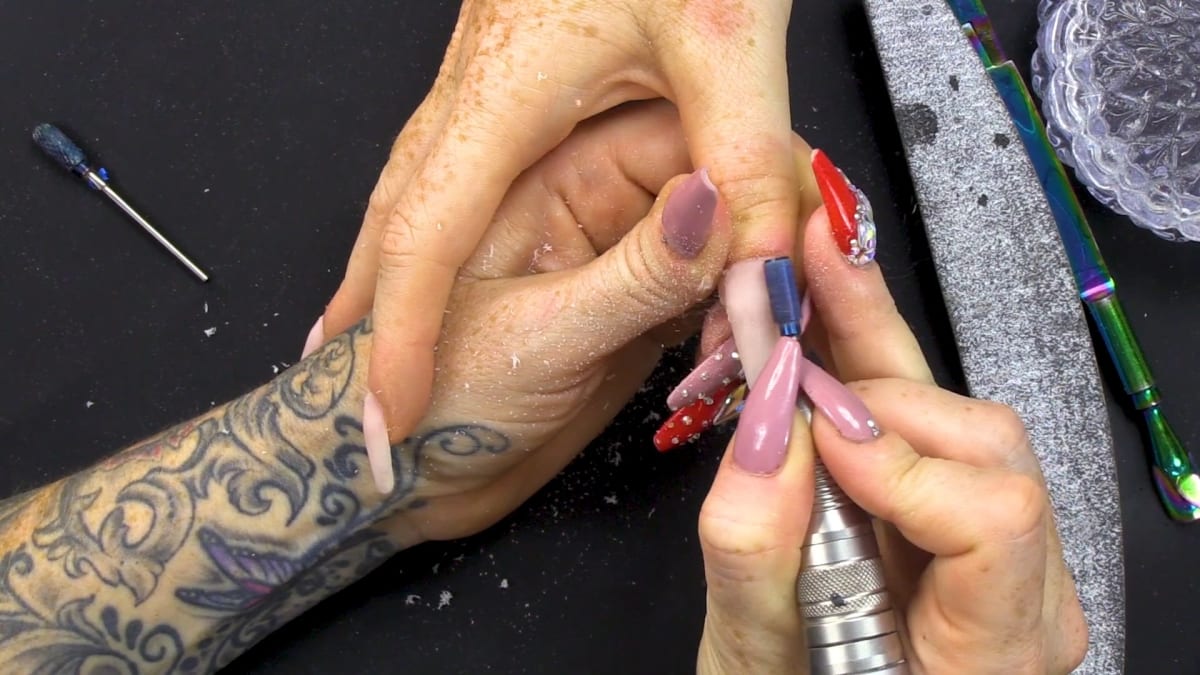
Go over the nails with the electric file. Kirsty uses the flat-end bit because the nails are short, with the speed turned up to about 15, to take off the bulk and begin smoothing. Watch this step at 0:30
2. Smooth each nail
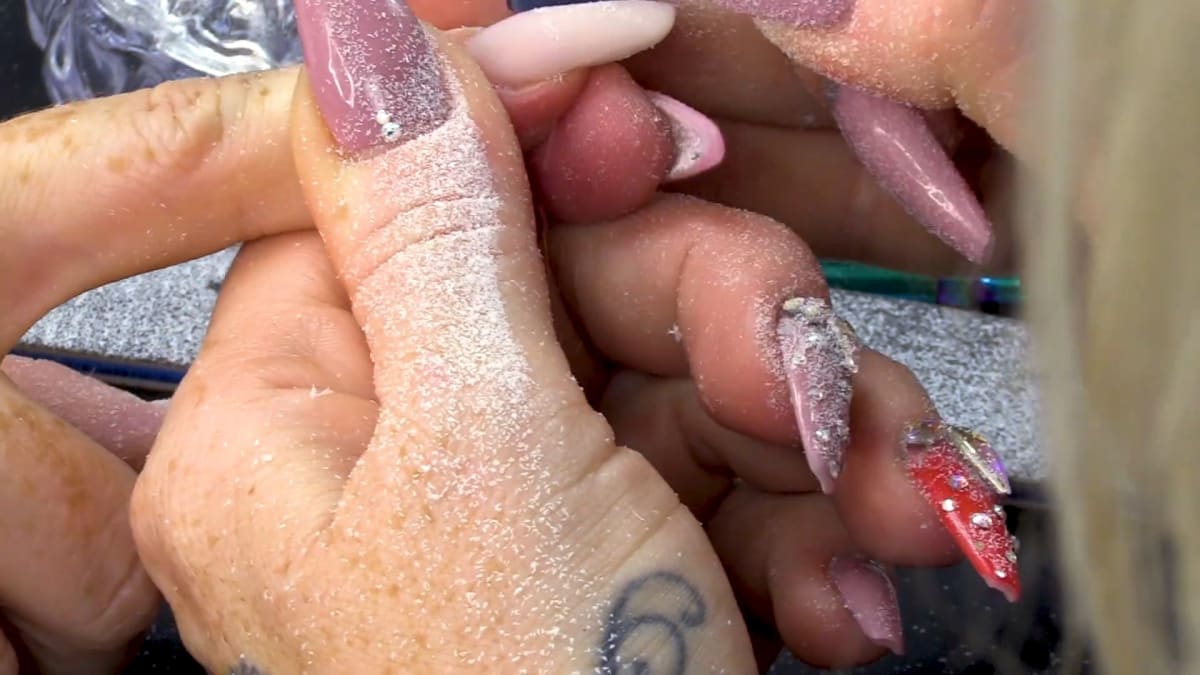
The flat end has a bevelled curve, so it does not cut into the skin or the nail. Go nail by nail and smooth them out. Watch this step at 2:00
3. Straighten with a hand file
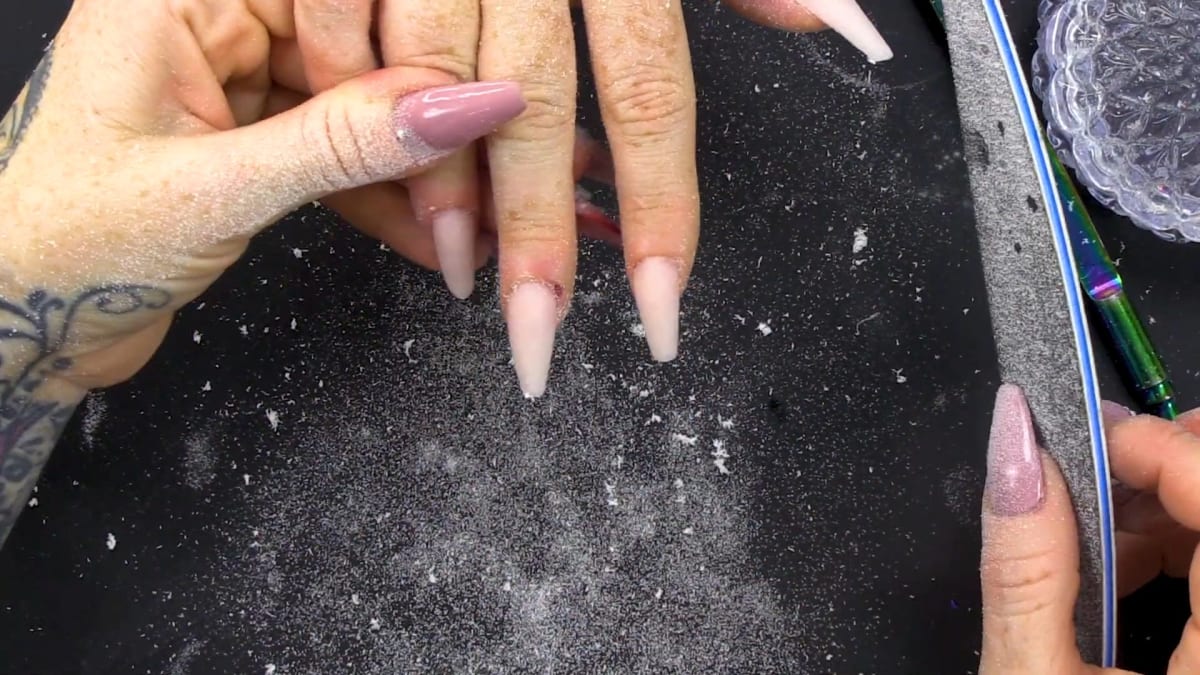
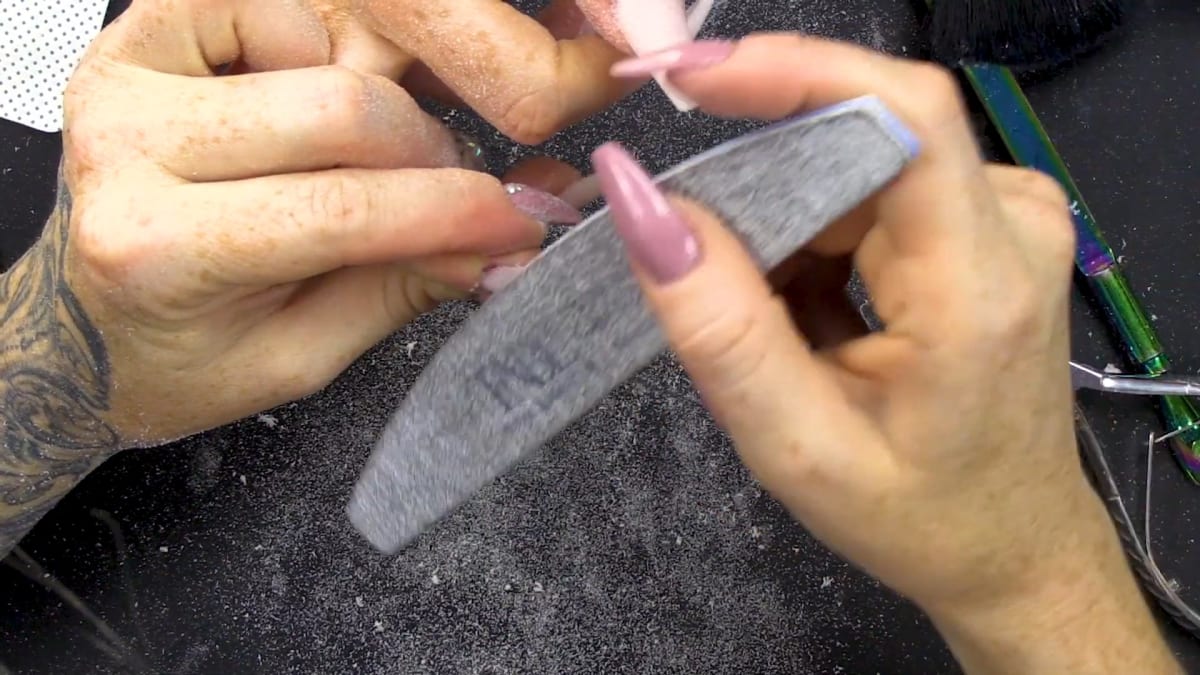
Use a hand file to straighten the sidewalls. The routine is always sidewalls, cuticle area, free edge, then the top surface. Watch this step at 3:00
4. Take care near damaged skin
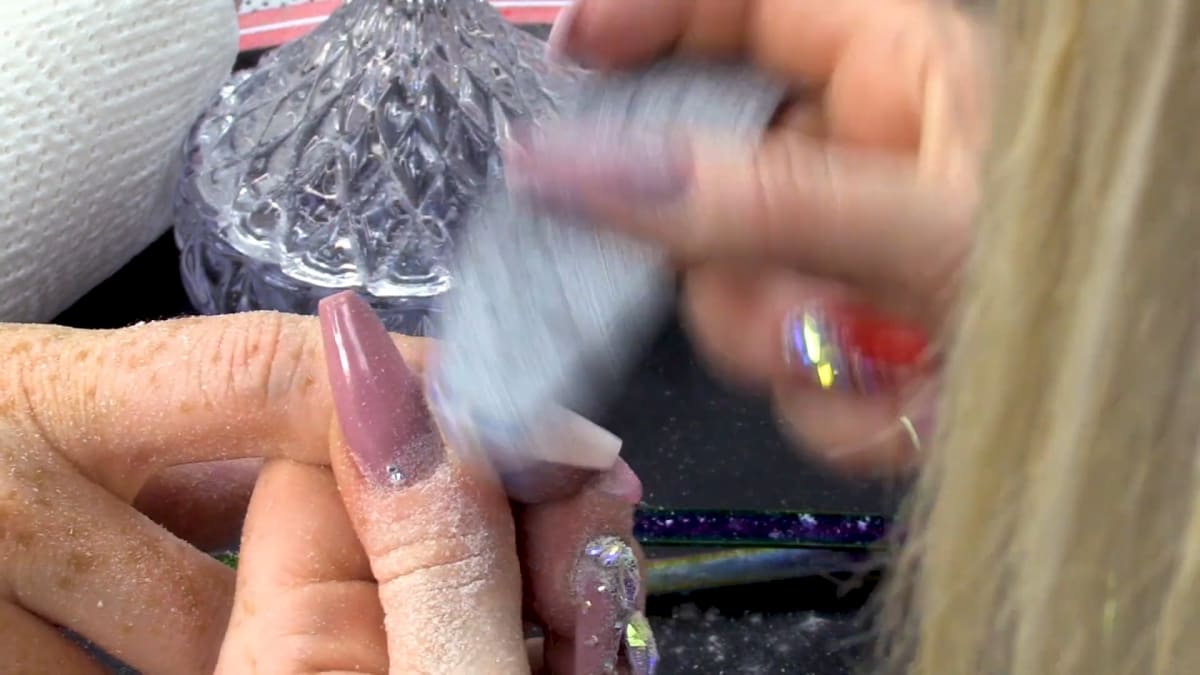
Dust the nails off so you can see what you are doing, and file only what needs doing without opening the skin. Watch this step at 5:00
5. Buff
Buff over with the 3 Way Buffer. It is quick but easy to catch the edges, so be careful. Watch this step at 6:00
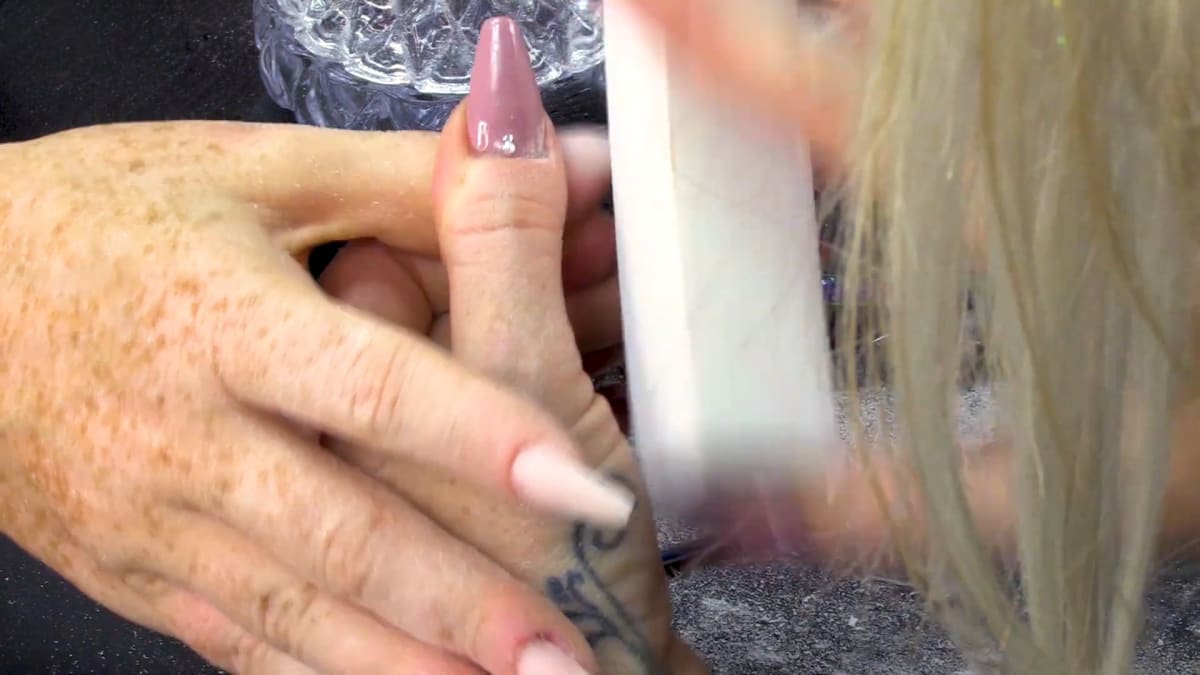
6. Dust and wipe with Pure Acetone
Dust off, then wipe over with Pure Acetone to melt the top surface and make it even smoother. Your e-filed acrylic nails are ready for the next step. Watch this step at 7:00
Where to find each stage of the E-Filing Acrylic Nails video
| Stage | Time |
|---|---|
| Removing the bulk | 0:30 |
| Smoothing each nail | 2:00 |
| Hand filing | 3:00 |
| Care near damaged skin | 5:00 |
| Buffing | 6:00 |
| Acetone wipe | 7:00 |
Pro Tips
- Only use an e-file if you have been trained to use one
- Do the same filing routine on every nail to build speed and a uniform finish
- Do not use abrasive bits on the natural nail
Common Mistakes and How to Fix Them
- Using an e-file without training: get trained first and practise on a practice hand.
- Abrasive bits on the natural nail: keep them off the natural nail.
- Catching the edges when buffing: slow down and go carefully.
- Skipping the acetone wipe: it smooths the surface.
Who Is This For?
This tutorial is for trained nail technicians who want to speed up filing acrylic sets while keeping a smooth, even finish.
Ways to Make It Your Own
- Choose a round or flat-end bit
- Adjust the speed to the nail length
Aftercare
Dust the nails off after filing so they are clean before the next step.
Frequently Asked Questions
How do you e-file acrylic nails?
Remove the bulk with an electric file and a smooth, bevelled bit, smooth each nail, straighten with a hand file, buff lightly and wipe with Pure Acetone.
Is an e-file safe?
Kirsty says it is fine if used correctly, and that bad experiences usually come from incorrect use or abrasive bits on the natural nail.
Which bit does Kirsty use?
The flat end, because it has a bevelled curve that will not cut into skin or nail.
What speed does Kirsty use?
About 15, on short nails.
What does the acetone wipe do?
It melts the top surface so the nail is smoother.
What order is the hand filing done in?
Sidewalls, cuticle area, free edge, then the top surface.
Give E-Filing a Try
Once trained, e-filing acrylic nails will save you time and effort. Watch Kirsty's video above, then practise on a practice hand before using it on a client.


